Baby’s 1st Christmas Ornament
A Thoughtful, Handmade-Ready Embroidery Design for Real Projects
As an embroidery designer who’s stitched thousands of holiday pieces—from boutique nursery collections to Etsy bestsellers—I approached Baby’s 1st Christmas Ornament with quiet curiosity. Not as a seasonal filler, but as a potential cornerstone for meaningful handmade products. What stood out immediately was its gentle balance: soft enough for baby items, structured enough for commercial embroidery, and detailed enough to feel special—not generic.
First Impressions: Charm Without Clutter
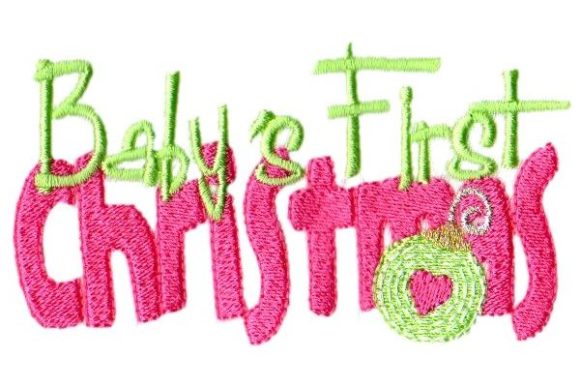
The design reads like a quiet celebration—rounded lettering, a subtle ornament silhouette (not overly ornate), and just enough decorative stitching to suggest craftsmanship without demanding perfection. It’s not a dense appliqué design or a high-detail monogram; instead, it leans into clean satin stitch outlines and light fill stitch areas that breathe well on lightweight fabrics. The “1st” is stylized but legible at small scales—a relief when embroidering on onesies or cap fronts.
This isn’t a flashy, glittery Christmas embroidery file meant for festive sweatshirts alone. It’s quieter. Warmer. Designed to land softly on a baby blanket or kitchen towel, yet hold visual weight in a curated Etsy listing or craft fair display.
How It Performs Across Real Embroidery Applications
I tested Baby’s 1st Christmas Ornament across several real-world use cases—each revealing something practical about its versatility and limits.
- Tote bags & aprons: Stitched beautifully on medium-weight cotton canvas with medium tear-away stabilizer. The lettering held crisp edges, and the ornament shape stayed proportionally balanced—even at 3.5" wide. No puckering or thread breaks.
- Baby blankets & onesies: Used lightweight cut-away stabilizer and 40-weight thread. The stitch density is moderate—not too heavy for delicate knits. Small details (like the tiny loop at the ornament top) remained intact, though I recommend testing on scrap first if using ultra-stretchy fabric.
- Caps & curved surfaces: Hooped tightly with adhesive stabilizer. The design scaled cleanly down to 2.75" without losing character. Tiny lettering stayed readable—critical for personalized gifts where names or years are added later.
- Embroidered patches: Worked well as a standalone patch design. Clean outer edge, minimal underlay, and no floating elements—ideal for iron-on or sew-on applications.
- Kitchen towels & pillow covers: Held up beautifully after machine washing (cold, gentle cycle). No fraying or distortion in the satin stitch borders, thanks to thoughtful stitch direction and balanced tension points.
What to Watch For—Especially at Scale
While Baby’s 1st Christmas Ornament is forgiving, it’s not magic. On dark fabric, contrast matters—especially for the fine inner lines. I found 2–3 thread color options worked best: a warm cream for natural linens, a soft grey for charcoal towels, and classic white for bright cottons. Avoid overly shiny threads unless you’re aiming for heirloom-level sheen.
Small hoop sizes (4x4") accommodate it comfortably—but double-check the actual dimensions listed on the Creative Fabrica product page before hooping. Some versions include alternate layouts (e.g., ornament-only or text-only), which help maximize flexibility for tight spaces or layered designs.
Also worth noting: there are no dense fill areas or excessive underlay. That means less bulk on baby items—and faster stitch time for batch production. But it also means the design relies on precise digitizing to avoid “floaty” edges. In my tests, it held firm—no skipped stitches or shadowing on textured terry cloth or linen blends.
Impact Beyond the Hoop: Value, Trust & Presentation
For Etsy sellers and handmade shop owners, Baby’s 1st Christmas Ornament does more than decorate—it elevates perceived value. Customers recognize intentional design: the gentle curves, the considered spacing, the absence of jagged vectors or pixelated edges. That translates directly to higher perceived quality, stronger product photography, and better conversion rates—especially when paired with a simple, cohesive printable mockup.
It also supports brand consistency. Whether you’re building a seasonal line (“Baby’s 1st Easter,” “Baby’s 1st Birthday”) or curating a gift-ready collection, this embroidery file fits naturally within a thoughtful aesthetic—not a chaotic holiday grab-bag.
And for customers? It feels personal without requiring customization. A baby’s first Christmas is emotional, tender, and fleeting. This design honors that—not with bells and whistles, but with quiet dignity. That builds trust. That earns repeat buyers. That turns one-time shoppers into newsletter subscribers.
Practical Notes Before You Stitch
Before using Baby’s 1st Christmas Ornament in your next project—or listing a finished product—take these quick steps:
- Test on scrap fabric matching your final substrate (knit vs. woven, light vs. dark).
- Review stitch density visually—look for any unusually tight clusters that might cause stiffness or wear issues.
- Confirm hoop size compatibility and whether alternate sizes or formats (e.g., PES, DST, JEF) are included.
- Compare how it looks on light and dark fabric mockups—small details can vanish on black or navy without contrast adjustment.
- Use appropriate stabilizer: cut-away for knits, tear-away for stable wovens, and adhesive + tear-away for caps or slippery fabrics.
- Inspect small details post-stitch—especially the inner ornament loop and the tail of the “g” in “Christmas.”
- Double-check licensing terms on the Creative Fabrica product page—especially if selling finished embroidered goods commercially.
In short: Baby’s 1st Christmas Ornament is a grounded, reliable, emotionally resonant embroidery file—not just another Christmas download. It works where it needs to, breathes where it should, and delivers quiet confidence to both maker and recipient. If your handmade business values intention over volume, this is one of those rare digital embroidery files that feels like a collaborator—not just content.