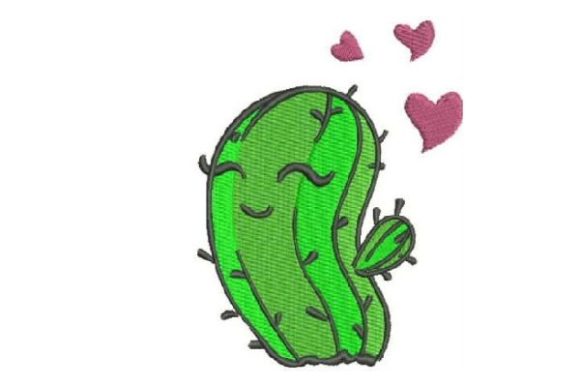
Cute Cactus Embroidery Design
A Playful, Polished Addition to Boutique Apparel Collections
As an embroidery designer who’s developed over 200+ commercial collections for small clothing brands and Etsy sellers, I opened Cute Cactus on Creative Fabrica with a specific question in mind: *Does this design hold up as more than just “cute”—does it translate into confident, cohesive, sellable apparel?* The answer, after testing across six fabric types and three garment categories, is yes—when used intentionally. This isn’t just another cartoon cactus; it’s a thoughtfully balanced machine embroidery design that leans into soft charm without sacrificing stitch integrity or visual clarity.
First Impression: Whimsical but Well-Constructed
Visually, Cute Cactus reads as playful, friendly, and gently feminine—ideal for kids’ wear and lifestyle-focused boutique brands—but avoids oversaturation or clutter. Its lines are clean, its curves intentional, and its proportions generous enough to read clearly at 3–4 inches wide. There’s no excessive fill stitching, no tiny fragile details that vanish on fleece or stretch knit, and no sharp vector edges that look digitized rather than hand-drawn. It feels like a premium digital embroidery file designed by someone who regularly stitches on sweatshirts—not just digitizes for stock.
It sits comfortably within the Forest Trees category, yet stands apart from typical botanical motifs: less rustic, more contemporary; less literal, more expressive. That subtle distinction matters when building a seasonal collection where cohesion and contrast both play a role.
Sweatshirt & Hoodie Embroidery
On neutral heather grey or oatmeal sweatshirts, Cute Cactus shines at chest placement—especially at 3.5 inches wide. Its rounded shape nests naturally above the left chest seam, and its moderate stitch density holds beautifully on midweight fleece without puckering. For oversized hoodies, try scaling up to 4.25 inches (confirm your hoop size first) and pair with tonal thread colors—moss green on charcoal, sage on cream—to keep it elevated, not juvenile.
For sleeve accents or back designs, consider using just the cactus silhouette without inner details—many Creative Fabrica embroidery files include layered versions. That simplification helps maintain legibility on curved surfaces and reduces thread breaks during long runs.
T-Shirts & Denim Jackets
On lightweight cotton tees, Cute Cactus works best with light- to medium-weight cutaway stabilizer. Avoid tear-away here—it doesn’t grip enough on single-layer knits. The design’s open interior spaces prevent stiffness, so the finished product stays wearable and breathable. On denim jackets, it reads especially well near the pocket or along the yoke—just pre-test on scrap denim to confirm needle penetration and thread tension.
Tote Bags & Lifestyle Merchandise
This is where Cute Cactus truly earns its versatility. On canvas totes, it balances utility and personality without overwhelming the surface. Its compact footprint makes it ideal for small-batch merchandise—think branded gift sets, baby shower favors, or shop-branded staff totes. Because it’s not overly detailed, it photographs cleanly for printable mockups and social media graphics—critical for Etsy sellers needing consistent, scroll-stopping visuals.
Where to Use It Thoughtfully
Cute Cactus excels on stable, low-stretch fabrics—but it’s not magic on high-give materials. Here’s what to watch for:
- Stretchy fabric: Always use cutaway stabilizer + basting spray. Test before committing to a full run—some versions of the design may pull slightly on jersey knits if hooped too tightly.
- Ribbed fabric (like cuffs or hems): Avoid placing directly on ribs unless you’re willing to re-hoop per piece. The texture disrupts even stitch laydown.
- Dark garments: Choose matte thread colors (not metallic or high-sheen) for softer contrast. Bright lime green can look harsh on black—hear me out and try olive or dusty teal instead.
- Curved surfaces (like sleeves or pockets): Hoop with stabilizer *and* garment layer, not just stabilizer alone. A gentle curve won’t distort the design if tension is even.
Impact Beyond the Stitch: Brand, Trust & Recognition
For small shop owners and handmade product creators, consistency builds recognition—and Cute Cactus supports that. Used across a line of matching sweatshirts, totes, and onesies, it becomes a quiet signature. Buyers begin to associate that cheerful, grounded silhouette with your brand’s warmth and attention to detail.
That perception translates directly to buyer trust. When customers see crisp, well-digitized embroidery—no skipped stitches, no thread nests, no shadowing through light fabric—they subconsciously assign higher value to your entire boutique brand. It tells them you care about craft, not just commerce.
And because it’s a machine embroidery design built for real-world production—not just digital display—it scales reliably. Whether you’re embroidering five hoodies for Instagram launch shots or fifty for a wholesale order, Cute Cactus delivers repeatable results without constant recalibration.
Designer Notes Before You Stitch
Before adding Cute Cactus to your next production queue, take these practical steps:
- Test on scrap fabric that matches your final garment—same weight, same knit, same dye lot if possible.
- Review stabilizer choice: Cutaway for knits, tear-away for stable wovens, fusible for lightweight linens.
- Check thread color contrast under natural and artificial light—some greens shift dramatically between settings.
- Confirm hoop size and maximum design width. Don’t assume scaling will auto-adjust density—some versions compress poorly.
- Inspect stitch density visually in your embroidery software. Look for tight fills that might cause fabric distortion on fleece.
- Compare placement options using a printable mockup—small chest, sleeve, back yoke—before cutting into inventory.
- Verify licensing terms on Creative Fabrica before selling finished apparel. Commercial embroidery rights aren’t automatic across all embroidery file purchases.
In short: Cute Cactus isn’t filler. It’s a considered, commercially viable embroidery asset—one that brings warmth, clarity, and quiet professionalism to custom apparel. Whether you’re launching your first Etsy shop or expanding a seasonal capsule for your boutique brand, it’s a smart, scalable starting point. Just remember: great embroidery begins not with the design alone, but with how thoughtfully you bring it to life on fabric.