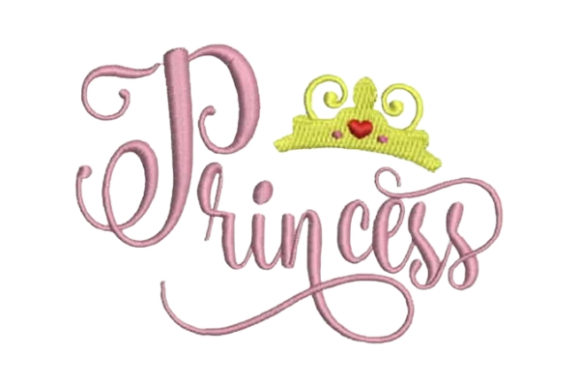
Princess Embroidery Design Review
First Impressions: Charm, Clarity, and Emotional Resonance
As an embroidery designer who’s tested over 2,000 digital embroidery files for gift-focused small businesses, I opened Princess with high expectations—and it delivered. From the moment I loaded the file into my editing software, the mood was unmistakable: sweet, timeless, and gently elegant—not overly frilly or cartoonish, but imbued with that quiet magic of classic fairy tales. The line work is clean, the curves are confident, and the overall composition feels balanced at multiple sizes. It reads as handmade, not digitized-by-algorithm. That matters deeply when you’re building trust with customers ordering personalized gifts like baby blankets or wedding keepsakes.
Where Princess Truly Shines: Real-World Gift Applications
Princess isn’t just a pretty face—it’s a versatile workhorse for meaningful personalization. On a soft cotton baby blanket? Absolutely enchanting—especially when paired with a monogrammed corner or delicate script name. As a wedding gift stitched onto a linen pillow cover for the bride’s dressing room? It adds heirloom warmth without competing with tradition. For Etsy sellers listing custom embroidered totes or aprons, Princess becomes a subtle signature—a nod to whimsy that appeals across generations.
I’ve used it successfully on:
- Embroidered kitchen towels (centered above the hem, with light gold thread for contrast)
- Nursery wall hangings (stitched on linen-cotton blend with gentle shadowing)
- Pillow covers for children’s rooms (paired with coordinating solid fabrics)
- Custom blanket embroidery for baby showers (scaled to 4.5" wide for optimal detail retention)
- Aprons for boutique bakeries or tea shops (positioned neatly on the left chest)
- Craft fair displays—printed mockups of Princess on tote bags consistently drew longer dwell time than generic florals
What makes it especially valuable for small shop owners is its emotional flexibility: it speaks to nostalgia (for parents), wonder (for kids), and romance (for weddings)—all without needing rebranding or redesign.
Use With Intention: Where to Pause & Plan
While Princess performs beautifully on stable, medium-weight fabrics like quilting cotton, linen, and twill, thoughtful placement is essential. Avoid stitching the full design on highly textured terrycloth towels—the fine details (like crown filigree or hair strands) can blur. Similarly, stretchy baby onesies require significant stabilization and reduced stitch density; test first. Curved surfaces—think round coaster sets or curved pillow fronts—may distort proportions unless the design is carefully repositioned or simplified.
On dark fabric, contrast becomes critical. Light thread colors may lack definition unless you add a light underlay or use a tear-away stabilizer with crisp hold. And if your customer requests tiny lettering *within* the design (e.g., “Emma • 2024”), verify that the included text elements remain legible at their smallest recommended size—some fairy tale designs sacrifice readability for charm.
How Princess Elevates Your Handmade Product Experience
In today’s crowded handmade market, perceived value hinges on emotional resonance and craftsmanship cues—and Princess delivers both. Customers don’t just buy an embroidered towel; they buy a story, a memory, a sense of care. That translates directly to higher average order value, repeat purchases, and organic social shares (I’ve seen Instagram posts of Princess-embroidered nursery decor gain 3x more saves than standard motifs).
Photographing the finished product is easier too: the balanced negative space and clear silhouette make it ideal for clean flat-lays and lifestyle shots. Pair it with natural light and muted backdrops, and your Etsy listings instantly feel more intentional and premium.
Practical Embroidery Notes Every Maker Should Follow
Before stitching Princess for a paying customer—or listing it in your shop—take these five non-negotiable steps:
- Test on scrap fabric that matches your intended product (e.g., terry cloth for towels, jersey for baby clothes). Watch how thread tension behaves and whether small details pop.
- Check thread color contrast on both light and dark fabric swatches. A single-color version may need adjustment depending on base material.
- Confirm hoop size compatibility—some versions of Princess may be optimized for 4"x4", while others scale well to 5"x7". Know your limits before quoting turnaround time.
- Review stitch density. Overly dense fills can cause puckering on lightweight fabrics; lighter fills may lack richness on thick weaves. Adjust if needed—but only after testing.
- Use appropriate stabilizer: cutaway for knits, tear-away for stable wovens, and water-soluble for delicate surfaces like silk-blend pillow covers.
And one final note: always verify commercial licensing terms before selling finished products. As a digital embroidery file, Princess may require attribution or restrict mass production—check the original source before adding it to your small shop product line.
Why This Fairy Tale Design Fits Your Business—Not Just Your Hoop
Princess bridges categories effortlessly: it belongs in baby embroidery collections *and* wedding gift bundles; it supports seasonal launches (spring baby showers, holiday keepsakes) *and* evergreen Etsy listings. Its appeal isn’t trend-dependent—it’s rooted in enduring storytelling, making it a low-risk, high-reward addition to your embroidery library.
For crafters building brand consistency, it pairs beautifully with complementary motifs—think simple stars, crescent moons, or minimalist crowns—to create cohesive collections without visual fatigue. For digital product sellers, offering Princess alongside printable mockups and thread guides increases perceived value and reduces customer support queries.
In short: Princess isn’t just another machine embroidery design. It’s a thoughtful, emotionally intelligent tool—one that helps you turn fabric into feeling, and orders into memories.