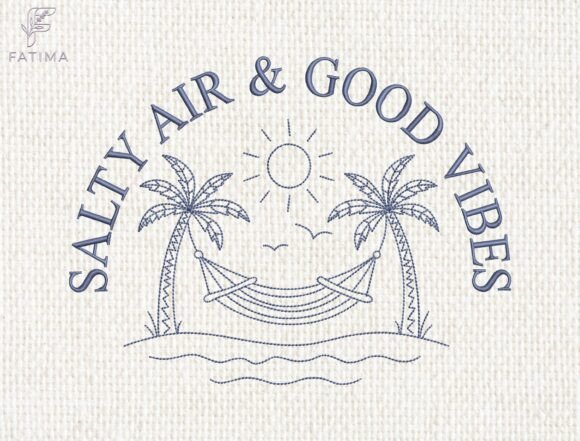
Salty Air Good Vibes Embroidery Design
First Impression: Coastal Charm Meets Brand-Ready Clarity
As an embroidery designer who’s digitized and stitched over 1,200 small business assets—from café aprons to boutique tote bags—I immediately recognize the quiet strength in Salty Air Good Vibes Embroidery Design. The title alone signals a clear seasonal and emotional positioning: relaxed, sun-warmed, authentically coastal—not generic “beachy,” but intentionally breezy. The description hints at elegance and tropical ease, suggesting a design that leans into sophistication rather than cartoonish flair. That matters deeply for small business merch: customers don’t just buy a logo—they buy a feeling aligned with your brand’s voice. Whether you run a seaside florist, a slow-living ceramic studio, or a locally roasted coffee shop with ocean views, this design doesn’t shout—it invites.
Real-World Business Performance: Where It Shines (and Where to Pause)
Salty Air Good Vibes Embroidery Design excels as a versatile branding element across high-touch customer-facing items. On embroidered patches—especially 2.5”–3.5” merrowed or heat-seal backed—it reads cleanly without visual clutter. As a chest accent on staff uniforms or aprons, its balanced composition holds up under daily wear and repeated laundering—provided stitch density isn’t excessive (a key check before production). For cap embroidery, position it thoughtfully: centered on the front panel works best if the design avoids tight letter spacing or fine interior details that collapse at 2” width. As a sleeve detail on linen-blend work shirts or a subtle corner mark on organic cotton tote bags, it reinforces brand identity without overwhelming function.
Where caution is warranted: avoid using Salty Air Good Vibes Embroidery Design at under 1.75” on curved surfaces like baseball caps unless you’ve tested the fill stability. Tiny lettering—especially in “Good Vibes”—can blur if digitized with low stitch count or insufficient underlay. Likewise, on dark uniforms or textured fabrics (like heavy canvas or bouclé), contrast between thread colors and base fabric becomes critical. Always verify thread color recommendations match your garment palette—not just aesthetics, but durability under UV exposure and friction.
Brand Identity Impact: More Than Just Summer Decor
This isn’t just another seasonal embroidery file. When applied consistently across aprons, product tags, reusable packaging accents, and staff caps, Salty Air Good Vibes Embroidery Design builds cohesive brand recognition rooted in mood and place. Customers associate that breezy rhythm with authenticity—not mass-produced, but intentionally curated. For Etsy sellers and handmade brands, it elevates perceived value: machine-embroidered elements signal craft investment and attention to tactile detail. For local businesses—say, a coastal bakery gifting branded totes—it deepens emotional connection. People don’t remember slogans first; they remember how your brand made them feel. “Salty Air Good Vibes” delivers that quietly, confidently.
Practical Designer Notes for Small Business Use
Before stitching Salty Air Good Vibes Embroidery Design into your next commercial embroidery project, follow these field-tested steps:
- Test in black and white first. Monochrome reveals spacing issues, overlapping fills, and legibility flaws invisible in color previews.
- Verify small-patch viability. Resize the digital embroidery file to your target patch dimensions (e.g., 2” wide) and zoom in—do outlines stay crisp? Does text retain shape?
- Review thread color contrast. Simulate your chosen thread palette against actual fabric swatches—not screen colors—to prevent muddiness on dark or heathered textiles.
- Inspect spacing and kerning. Tight lettering in “Good Vibes” must breathe—crowded letters trap lint and fray faster during washing.
- Confirm hoop size compatibility. Ensure your embroidery machine’s standard hoop accommodates the design’s widest dimension without re-hooping mid-stitch.
- Test on real fabric + stabilizer. A cotton-linen blend behaves differently than poly-cotton—always stitch a sample using your exact stabilizer type and tension settings.
- Create a printable mockup for client approval. Show how Salty Air Good Vibes Embroidery Design looks on the final garment—apron pocket, cap front, tote side—before digitizing or cutting thread.
- Compare beside existing design assets. Does it harmonize with your current logo, typography, and color system—or compete for visual attention?
- Confirm commercial licensing. If sourcing from a third-party marketplace, double-check usage rights for resale merchandise, staff uniforms, and digital mockups—many files restrict commercial embroidery without extended licenses.
Final Thought: A Strategic Summer Asset, Not Just a Trend
Small business merch isn’t about filling space—it’s about reinforcing trust, consistency, and care at every touchpoint. Salty Air Good Vibes Embroidery Design stands out because it balances aesthetic warmth with technical readiness. It’s not merely decorative; it’s deployable. Whether stitched onto a barista’s apron at a harbor-side café, heat-applied as a patch on a pet brand’s adventure tote, or embroidered as a subtle sleeve motif for a floral studio’s team shirts, it carries intention. And in today’s market—where handmade presentation and sensory brand cues drive loyalty—that intention translates directly into engagement, repeat visits, and word-of-mouth growth. Treat Salty Air Good Vibes Embroidery Design as a living part of your brand toolkit—not a one-season flourish, but a breathable, enduring expression of your small business’s spirit.