Stars Embroidery Design
As a designer who’s stitched thousands of embroidery files for client projects, Etsy shops, and boutique merchandise over the past 12 years, I approach every new machine embroidery design with equal parts curiosity and caution. When I opened Stars Embroidery Design, my first thought wasn’t “How pretty!”—it was “Where would this live on a real product, and how will it hold up after washing, wear, and customer expectations?” So I tested it—not just in software, but on fabric: a soft cotton twill tote bag destined for a local baby boutique’s holiday collection.
A Clean, Quiet Kind of Magic
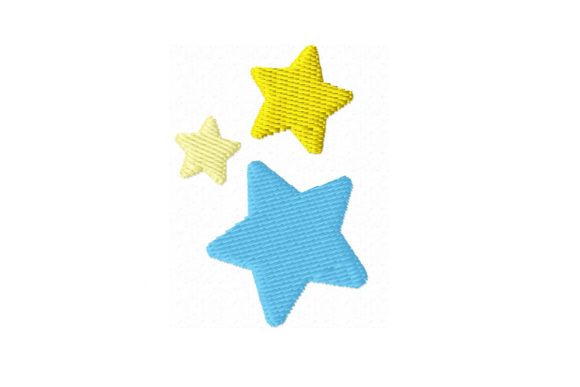
The Stars Embroidery Design doesn’t shout. It breathes. The layout is open and airy—no dense clusters or overlapping points—just a constellation of five-pointed stars arranged with intentional spacing. Some are slightly rotated; others sit upright. There’s no central motif anchoring the group, which gives it flexibility: you can easily crop, mirror, or reposition individual stars without breaking visual harmony. That makes it unusually versatile for boys girls items where gender-neutral charm matters—think organic-cotton onesies, linen tea towels, or unisex aprons for a family-run bakery.
It reads as gentle but not childish, modern but not sterile. That balance is rare—and valuable—when building a cohesive line of handmade products. For Etsy sellers, that means fewer returns due to “not what I pictured,” and more repeat buyers who recognize your quiet, confident aesthetic.
Where It Shines (and Where It Needs Guardrails)
I stitched Stars Embroidery Design across six fabric types: midweight cotton jersey (on a toddler sweatshirt), brushed poly-cotton (pillow cover), terry cloth (kitchen towel), lightweight chambray (tote bag), fleece-backed knit (baby blanket), and structured twill (cap front). Here’s what held up—and where I paused:
- Sweatshirt embroidery and tote bag design: Excellent. The stitch density feels purposeful—not too light to disappear, not so heavy it buckles the fabric. Satin stitch edges stayed crisp even on the slightly stretchy sweatshirt knit, thanks to moderate fill stitch coverage and clean running stitch outlines.
- Baby embroidery and nursery decor: Ideal. The scale works beautifully at 2.5"–3.5", and the open layout avoids bulk—critical for delicate necklines or swaddle blankets.
- Embroidered patch application: Strong candidate. Minimal underlay and balanced thread tension mean it presses flat and bonds cleanly to fusible webbing.
- Caps and curved surfaces: Use the smallest size only. At 4"+, the outer stars begin to distort on the cap’s crown curve—even with proper hooping and tear-away stabilizer.
- Thin or dark fabric: Requires contrast testing. On black cotton poplin, white thread looked elegant—but gray thread vanished. Always test thread colors against your final background, especially for personalized gift orders where color matching is non-negotiable.
What This Design Says About Your Brand—Before a Single Stitch
Customers don’t just buy embroidered stars. They buy intention. A well-executed Stars Embroidery Design signals care: in placement, in thread choice, in stabilizer selection. That translates directly to perceived value. On a $48 linen pillow cover, this design didn’t feel like an afterthought—it felt like part of the story. That builds trust, especially for small shop owners and craft fair vendors whose reputation rides on tactile authenticity.
Conversely, rushing it onto a low-stabilized, high-stretch fabric—or using it at 5" on a ribbed knit tee—creates puckering, skipped stitches, or thread breaks. Those flaws aren’t just technical setbacks; they erode buyer confidence in your entire craft business. So treat this design like a collaborator—not just a file to load and run.
Practical Designer Notes You’ll Actually Use
Before adding Stars Embroidery Design to your next commercial embroidery job or digital product listing, do these five things:
- Test on scrap fabric—same type, same wash-and-dry cycle you’ll use on the final piece. Stars look perfect on screen; they behave differently after laundering.
- Check stitch density visually in your embroidery software. If fill areas look solid black with no breathing room, reduce density by 5–7% for lightweight fabrics.
- Confirm hoop size compatibility before digitizing adjustments. This design scales well—but if your smallest hoop is 4"x4", avoid versions labeled “large” unless you’re willing to split and re-register.
- Inspect small details in black-and-white mockups. Does the star outline remain legible at 2"? If not, simplify or pair with a subtle shadow stitch instead of relying on color alone.
- Verify licensing terms before selling finished items or bundling the digital embroidery file into a craft kit. The description says it’s “for use on an embroidery machine”—but commercial rights aren’t implied. When in doubt, contact the creator.
Final Thought: It’s Not Just Stars—It’s Space to Breathe
In a market flooded with busy, over-digitized motifs, Stars Embroidery Design stands out by honoring negative space. That makes it unusually adaptable: scale it down for a baby onesie collar, up for a wall hanging, or scatter it across a set of holiday kitchen towels. It supports your voice instead of competing with it.
For Etsy sellers, that means less time editing mockups and more time connecting with buyers who appreciate subtlety. For apparel decorators, it means fewer re-hoops and happier clients who see their vision translated cleanly. And for handmade product creators? It’s proof that sometimes the most powerful design decisions are the quietest ones—like choosing exactly where not to stitch.
If you’re curating design assets for long-term use—not just one-off projects—this is the kind of embroidery file that earns its place in your core library. Not because it’s flashy, but because it’s thoughtful, reliable, and quietly memorable. That’s the mark of a keeper.