My First Mother’s Day As Mom
A Thoughtful Script Design with Heartfelt Presence
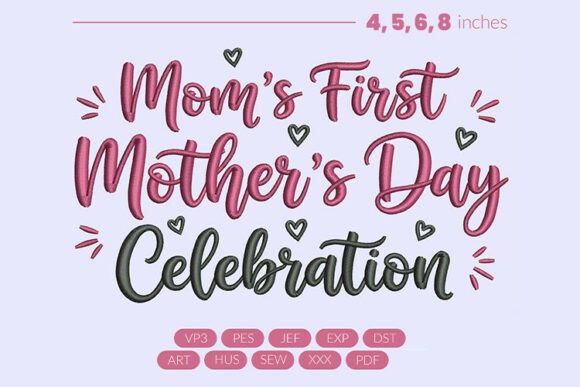
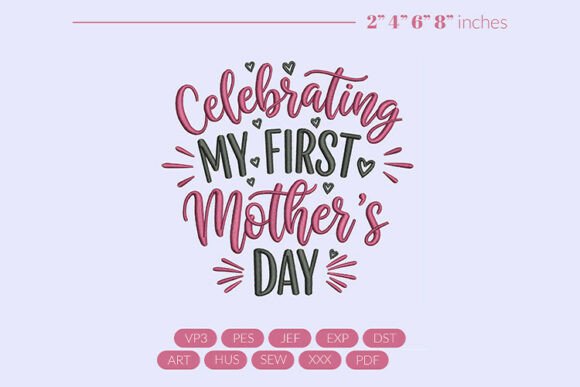
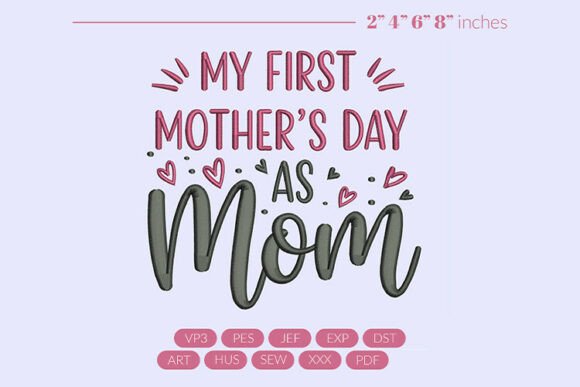
As an embroidery designer who’s developed collections for boutique apparel brands and Etsy sellers for over a decade, my first impression of My First Mother’s Day As Mom was immediate: it’s warm, intentional, and quietly elegant. The script lettering flows with natural rhythm—not overly ornate, not too minimal—striking that rare balance between handmade charm and polished professionalism. The heart accents are subtle but meaningful: small, centered, and stitched with clean definition. This isn’t a loud or trendy design; it’s timeless, feminine, and emotionally resonant—perfect for new moms who want sentiment without saccharine overload.
How It Performs Across Boutique Apparel
My First Mother’s Day As Mom shines brightest on soft, neutral-toned sweatshirts and oversized hoodies—think heather grey, oatmeal, blush, or soft sage. Its script reads clearly at chest placement (3.5–4.5 inches wide), especially when paired with high-contrast thread colors like navy on cream or burgundy on light grey. On dark garments, I recommend matte polyester or rayon threads to avoid glare while preserving legibility.
For sleeve accents on crewnecks or raglans, the design scales beautifully down to 2.75" without losing character—ideal for delicate, understated personalization. As a back design on a relaxed-fit hoodie? It holds presence without overwhelming the silhouette, especially when centered just below the collar seam. On t-shirts, it works best on midweight cotton blends—not ultra-thin jersey—where stitch density stays stable during wear and wash.
Denim jackets and structured tote bags are unexpected but strong fits. The script’s gentle curves complement denim’s texture, and the hearts add just enough detail to elevate a utilitarian piece. For seasonal cozy layers—knit cardigans, fleece-lined loungewear, or sherpa-trimmed hoodies—I’ve found My First Mother’s Day As Mom adds emotional warmth without visual clutter.
What to Watch for in Real-World Embroidery
This is a script-based design, so attention to fabric behavior is essential. On stretchy knits or ribbed fabrics (like sweater cuffs or waistbands), stabilizer choice becomes critical. I always pair it with medium-weight cutaway stabilizer—especially for sweatshirt embroidery where tension shifts can distort fine lettering. Fleece-backed hoodies require extra hooping care: smooth the fabric taut *without* stretching, and consider topping with water-soluble film if the script’s inner curves look prone to puckering.
Curved surfaces—like the rounded chest of a fitted hoodie or the shoulder seam of a cropped sweatshirt—call for strategic placement. Avoid placing the full phrase directly over high-movement zones; instead, center it slightly lower on the chest or shift to the left side for better drape integrity. Tiny lettering in script designs can blur on low-thread-count fabrics, so test on scrap fabric that matches your final garment’s weight and texture before committing.
Impact on Brand Voice and Customer Connection
When used intentionally, My First Mother’s Day As Mom strengthens brand identity for small shops focused on life-stage gifting. It signals empathy, craftsmanship, and emotional intelligence—qualities buyers associate with trusted boutique brands. On Etsy listings or Instagram posts, this design performs well in lifestyle product photos: styled on a mom holding her newborn, draped over a nursery chair, or folded beside baby shoes. Its readability in printable mockups helps maintain visual consistency across digital assets—no pixelation, no awkward scaling.
Customers recognize sincerity in execution. A clean, well-digitized script like this builds buyer trust faster than generic clipart-style fonts. It tells them you invested in meaningful detail—not just speed or volume. That perception lifts perceived value: a $48 sweatshirt with My First Mother’s Day As Mom feels more like a keepsake than a seasonal item.
Practical Designer Notes Before You Stitch
- Always test on scrap fabric—especially if using a new garment style or thread brand.
- Confirm stabilizer pairing: Cutaway for knits, tear-away for stable wovens like denim or canvas tote bags.
- Review thread color contrast before production. Light script on light fabric often needs shadowing or underlay adjustment—check your machine’s capability.
- Verify hoop size compatibility before digitizing or resizing. Some versions may require larger hoops for optimal stitch flow.
- Inspect stitch density visually—not just in software. Overly dense fills in heart accents can stiffen lightweight fabrics.
- Test on the exact garment fabric you’ll sell. A design that runs perfectly on cotton poplin may shift on French terry.
- Compare placement options across multiple mockups—chest, sleeve, back—to see where the script’s rhythm aligns best with garment lines.
- Double-check Creative Fabrica product details before commercial embroidery use: confirm included sizes, file formats, and licensing terms for finished apparel.
Final Thoughts for Small Shop Owners
My First Mother’s Day As Mom isn’t just another Mother S Day embroidery—it’s a quiet differentiator. In a market flooded with bold slogans and cartoonish motifs, this design offers emotional authenticity and refined execution. For Etsy sellers, custom apparel studios, and handmade product lines, it supports storytelling through stitching: honoring transition, celebrating tenderness, and marking milestones with dignity.
Used thoughtfully—with attention to fabric, stabilizer, and placement—it elevates sweatshirt embroidery from decoration to heirloom. And in today’s climate, where customers seek meaning alongside aesthetics, that kind of resonance doesn’t just sell one hoodie. It builds repeat buyers, word-of-mouth referrals, and long-term brand loyalty.