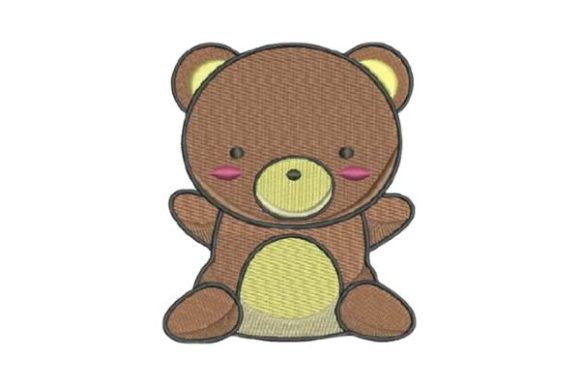
Cute Brown Teddy Bear
First Impressions: Soft, Sweet, and Surprisingly Versatile
When I opened the Cute Brown Teddy Bear embroidery file, what struck me first wasn’t just its charm—it was its quiet confidence. This isn’t a fussy, over-engineered bear with cartoonish exaggeration. It’s round-faced, gently proportioned, with softly tapered limbs and a subtle smile that reads as warm—not saccharine. The satin stitch details in the ears, paws, and stitching lines give it dimension without clutter. It feels handmade in spirit, even before the needle touches fabric. As a designer who’s stitched hundreds of animal motifs for baby onesies, boutique aprons, and Etsy gift sets, I immediately pictured it on a cream linen tea towel—simple, thoughtful, quietly joyful.
A Real-World Test: Stitching It on a Cotton-Linen Blend Tote Bag
Last week, I used Cute Brown Teddy Bear to embroider a custom tote for a local nursery owner’s holiday pop-up. We chose a medium-weight cotton-linen blend—breathable, textured, and popular with eco-conscious shoppers. With light tear-away stabilizer and 40-weight poly thread in warm taupe and cocoa, the design stitched cleanly. The satin stitches held their sheen, and the bear’s contours stayed crisp, even across the slight weave variation. Customers paused at the booth—not because it screamed “look at me,” but because it felt *intentional*. That’s the power of restraint done right: this bear doesn’t compete with the fabric; it complements it.
Where It Shines (and Where to Pause)
Cute Brown Teddy Bear excels in contexts where softness, sincerity, and subtle storytelling matter:
- Custom apparel: Works beautifully on sweatshirts (left-chest placement), baby bodysuits (center chest), and lightweight denim jackets (back yoke or pocket).
- Home + lifestyle goods: A standout on pillow covers, kitchen towels, and blanket corners—especially when paired with minimalist typography or solid-color backings.
- Personalized gifts: Embroidering it beside a child’s name on a backpack or bib adds instant heirloom appeal. Its scale reads clearly even at 3.5–4 inches wide.
- Small shop & Etsy products: As a digital embroidery file, it’s a low-risk, high-return addition to a seasonal bundle—think “Nursery Collection” or “Holiday Keepsakes.” Buyers appreciate its clean lines in mockups and real-life photos alike.
That said, it’s not universally bulletproof. On highly textured fabrics like bouclé or thick terry cloth, some of the finer satin stitch definition can blur—so test first. On stretchy knits (e.g., ribbed baby caps), use cutaway stabilizer and reduce top tension slightly to prevent puckering around the bear’s rounded edges. And while it’s labeled “perfect for kids,” avoid placing it near seams or curved surfaces like baseball cap fronts unless you’ve verified hoop clearance and digitizing flow.
What It Adds to Your Finished Product—Beyond Cuteness
It’s easy to call Cute Brown Teddy Bear “adorable”—but as a designer evaluating commercial viability, I look deeper: Does it elevate perceived value? Does it reinforce brand voice? Does it translate well across mediums?
Yes—to all three. Its balanced proportions and consistent stitch density make it photograph well in printable mockups and social media posts. It reads clearly in black-and-white line art, which matters for branding consistency on tags, packaging, or digital previews. For Etsy sellers, that clarity builds buyer trust: customers know exactly what they’re getting—not a pixelated promise, but a confident, stitch-ready asset. And because it avoids tiny lettering or micro-details, it holds up through repeated washing on baby items or kitchen linens, supporting long-term product satisfaction.
Practical Designer Notes Before You Stitch
Before adding Cute Brown Teddy Bear to your next craft business order or client project, take these five minutes:
- Test on scrap fabric—especially if using dark thread on light fabric (or vice versa). Satin stitches behave differently under contrast shifts.
- Check stitch density. Even though it’s described as having “beautiful satin stitches,” verify no areas are overly dense—those can cause stiffness or thread breakage on lightweight materials.
- Confirm hoop size compatibility. If you’re stitching on curved surfaces (like a beanie) or tight spaces (like a bib corner), measure the design’s bounding box against your smallest hoop.
- Inspect small details—the inner ear curve, paw pads, and stitching lines—on screen and in a printed 1:1 template. What looks smooth digitally may need minor cleanup for your machine’s capabilities.
- Review licensing. Since this is listed under Freebies, double-check whether commercial use is permitted for finished products—or if redistribution of the embroidery file itself is restricted. Never assume.
Final Thought: A Thoughtful Anchor for Your Creative Work
Cute Brown Teddy Bear won’t solve every embroidery challenge—but it solves a very specific, very human one: how to convey warmth, care, and quiet craftsmanship in a single motif. It’s not flashy. It doesn’t need to be. In a market saturated with loud trends and overdesigned assets, this bear stands out by staying grounded—soft-edged, stitch-smart, and genuinely ready for real life. Whether you’re building a craft business, personalizing a holiday gift, or curating a collection of embroidery design assets, it’s the kind of piece that earns repeat use—not because it’s trendy, but because it’s trustworthy.
And honestly? That’s rarer—and more valuable—than most designers admit.