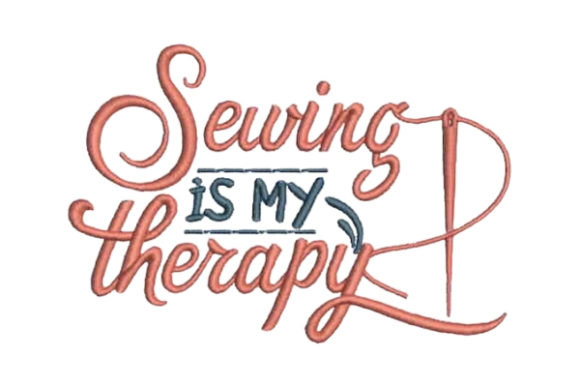
Sewing Is My Therapy
A Practical Review for Small Business Merchandise & Branded Patches
As an embroidery designer who’s digitized and stitched thousands of logos for cafés, boutiques, florists, pet brands, and handmade studios, I approach every new machine embroidery design with two questions: Does it communicate brand intent clearly? and Will it hold up in real-world production? When I first saw Sewing Is My Therapy, my instinct was immediate — this isn’t just a decorative phrase. It’s a statement that resonates with makers, creatives, and small business owners who lean into craft as both profession and purpose. The title feels warm, authentic, and confidently handmade — not overly cutesy, not coldly corporate. It lands somewhere between modern artisan and grounded professionalism.
First Impression: Friendly, Confident, and Professionally Handmade
Sewing Is My Therapy reads like a quiet mission statement — the kind you’d embroider on an apron worn behind a bakery counter or stitched onto a tote bag handed to a florist’s customer. It avoids trend-chasing fonts or forced whimsy. Instead, it suggests sincerity, skill, and emotional resonance. That tone is gold for small businesses building trust through authenticity. For a local studio, a handmade soap brand, or even a vet clinic with a “stitching together care” theme, this phrase reinforces values without needing explanation. It’s not flashy — but it’s memorable. And in merch, memorability builds recognition faster than any slogan trying too hard.
Where It Shines in Real Business Use
This machine embroidery design works exceptionally well across high-impact small business applications:
- Embroidered patches — Ideal for iron-on or sew-on branding on jackets, denim vests, or product packaging. Its balanced letter spacing and moderate height scale cleanly from 2.5" to 4".
- Apron embroidery — Perfect for chest placement on cotton or canvas aprons. The satin stitch finish adds subtle richness without overwhelming the fabric.
- Cap embroidery — Works best on structured front panels (not curved bill seams) when sized appropriately. Avoid stretching it too wide — clarity matters more than coverage.
- Tote bag design — A single-line version or simplified outline would pair beautifully with this phrase for minimalist boutique merch.
- Staff uniforms & custom apparel — Adds warmth to work shirts or smocks without sacrificing polish. Especially effective when paired with a small icon (scissors, needle, spool) — though Sewing Is My Therapy stands strong alone.
- Etsy branding & handmade product labels — Instantly signals craftsmanship. Buyers scanning digital listings respond to language that mirrors their own values.
Because it’s labeled a Freebies embroidery file, it’s also smart to treat it as a versatile starting point — not just a finished asset. Many designers layer it with monograms, dates, or location tags to create unique variations for pop-ups, markets, or seasonal campaigns.
Where to Use It Thoughtfully
Like any strong design, Sewing Is My Therapy has boundaries — and respecting them ensures your finished product reflects quality, not compromise:
- Avoid ultra-small patch sizes (under 1.75") unless you’ve tested the letterforms — fine details may blur or lose legibility.
- Curved surfaces (like cap crowns or rounded tote handles) require careful hooping and stabilizer selection. Test stitch first.
- Dark or textured fabrics (heavy twill, linen blends, fleece) need higher-contrast thread colors and possibly added underlay to prevent sinking.
- Frequent-wash items (staff aprons, reusable totes) benefit from tighter stitch density and quality stabilizer — confirm the file allows clean satin coverage without skipped stitches.
How It Strengthens Brand Identity & Customer Trust
Small business merch isn’t just about visibility — it’s about signaling alignment. When a florist embroiders Sewing Is My Therapy on staff aprons, they’re saying: *We value process, patience, and personal touch.* That builds quiet credibility with customers who choose local over algorithm-driven options. It elevates perceived value — a plain cotton tote becomes a keepsake; a basic uniform gains personality. And because the phrase leans into emotional resonance rather than sales language, it supports long-term brand identity without dating quickly.
For Etsy sellers or craft-based brands, pairing Sewing Is My Therapy with consistent thread colors and placement across products creates visual consistency — turning individual items into a cohesive collection. That cohesion makes mockups stronger, social posts more recognizable, and wholesale pitches more compelling.
Practical Designer Notes Before You Stitch
Before committing to bulk production, here’s what I always do — and recommend you do too:
- Test stitch Sewing Is My Therapy in black and white first — it reveals spacing issues, thread tension quirks, and unintended overlaps.
- Check how it reads at your target patch size. Resize digitally before stitching — don’t rely on machine scaling.
- Review thread color contrast against your fabric. Light gray on oatmeal linen? Beautiful. Pale yellow on cream cotton? Risky.
- Inspect letter spacing — especially between “S” and “e”, and “y” and “T”. Tight kerning can cause thread nesting.
- Confirm hoop size compatibility. Does it fit comfortably in your most-used hoop, or will you need re-hooping mid-stitch?
- Test on your actual fabric — not just stabilizer swatches. Fabric texture changes everything.
- Use appropriate stabilizer: cutaway for knits, tear-away for stable wovens, mesh for lightweight linens.
- Create a printable mockup for client approval — show it on an apron, cap, and tote side-by-side.
- Compare it beside your other design assets. Does it harmonize with your logo, typography, and brand palette?
- Verify commercial licensing — since this is listed as a Freebies embroidery file, double-check usage rights before selling embroidered goods.
Remember: a great embroidery file only becomes great merch when paired with intentional choices — fabric, thread, placement, and context. Sewing Is My Therapy gives you a strong foundation. Your expertise turns it into trusted brand expression.